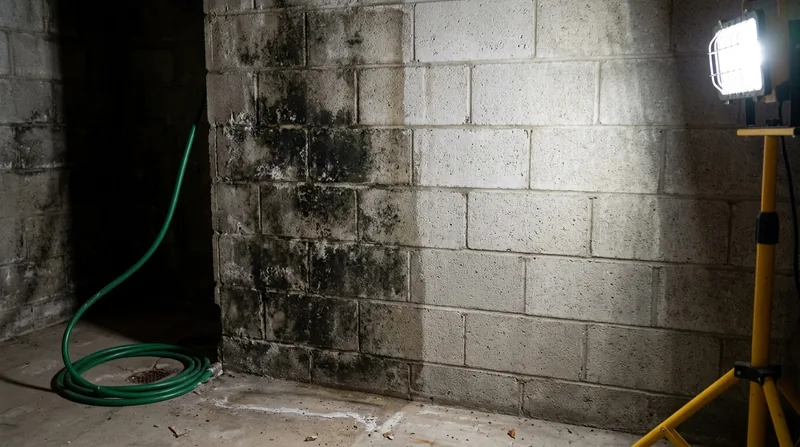




Basement Mold Remediation in Fargo: Fix the Moisture, Then the Mold
Fargo sits on the flat bed of glacial Lake Agassiz, and that heavy gray Red River clay holds water like a sponge. In the older neighborhoods like Hawthorne, Roosevelt, and Oak Grove, 1900s brick and frame bungalows have full basements of poured concrete, block, or early stone walls, and those walls stay damp through spring snowmelt and Red River flood stages. Basement Mold Remediation in Fargo starts with finding the moisture source, not just spraying the visible growth. We remove affected materials, treat the surfaces, and then fix the drainage or humidity problem that let mold grow in the first place. If you smell that musty odor every time you go downstairs, the fix is below grade. Learn more about our basement waterproofing in Fargo approach before you spend money on repeated cleanings.
Why Mold Grows in Fargo Basements and What It Takes to Stop It
Mold needs moisture, organic material, and still air. Fargo basements supply all three. The Red River clay swells when wet and drains slowly, so hydrostatic pressure pushes groundwater against footing walls all spring. Inside, cool concrete walls meet warm humid air in summer and condense. Add a failed sump pump or a clogged drain tile, and you have a wet basement that never fully dries. The mold is a symptom. The moisture is the cause.
- Hydrostatic pressure forces water through block mortar joints and hairline cracks in poured walls.
- High water table keeps the soil saturated around footings from March through June.
- Sump pump failure during a spring storm leaves the basin full and the floor wet.
- Poor grading and short downspouts dump roof water against the foundation instead of away from it.
- Cold wall condensation in summer feeds mold on drywall, framing, and stored boxes.
We test the moisture, identify the path the water takes, and write a scope that addresses both the mold and the source. That is the only way remediation holds.
Key info: A 1950s ranch in the older south side of Fargo had mold on the lower two feet of drywall after a sump pump failed during April snowmelt. We removed the affected drywall, treated the framing, and installed a battery backup sump pump so the next power outage would not flood the basin again.
For official guidance on moisture and mold in buildings, see the EPA mold resources.
How We Run Basement Mold Remediation in Fargo
We work in a sequence: stop the moisture, contain the mold, remove what is damaged, treat what stays, and verify the basement is dry. Skipping the moisture step means the mold returns in a season. We start with a musty smell diagnostic and a moisture map of the walls, floor, and framing, then we set containment and negative air so spores do not spread to the rest of the house.
- We inspect the basement and identify the moisture source, whether it is wall seepage, a failed sump pump, or condensation.
- We set up containment with plastic sheeting and negative air pressure to keep the work area isolated.
- We remove mold-damaged drywall, insulation, and porous materials and bag them for disposal.
- We treat structural surfaces with an antimicrobial and HEPA-vacuum the entire area.
- We correct the moisture problem with drainage, sealing, or dehumidification before we close up.
- We verify dryness with moisture meters and leave a written scope for any follow-up.
Every job ends with a dry basement and a clear explanation of what we did and why.
Key info: In a 1920s foursquare near Downtown Fargo, the mold was on the back of the furring strips against a stone wall. We removed the furring, treated the stone, and sealed the wall with a breathable coating to stop the efflorescence and dampness that kept the wood wet. See our basement wall sealing work for that part of the job.
Approaches We Use for Mold and Moisture in Fargo Basements
Not every basement needs the same fix. A single crack with surface mold calls for crack injection and a localized treatment. A wet floor along the cove joint after every rain calls for interior drainage. We match the approach to the moisture path we find.
| Approach | Description | Best for |
|---|---|---|
| Containment and surface treatment | Isolate the area, HEPA vacuum, remove damaged materials, treat framing and walls. | Localized mold on walls or stored goods with a known, fixable moisture source. |
| Crack injection plus treatment | Epoxy or polyurethane injection seals the crack, then we treat the surrounding wall. | Mold clustered around a single foundation crack with active seepage. |
| Interior drain tile and sump | Perimeter drain below the floor slab directs water to a sump basin and pump. | Wet floors and mold along the cove joint after every spring rain or snowmelt. |
| Dehumidification and ventilation | Control indoor humidity and air movement after the mold work is complete. | Condensation-driven mold on cold walls in summer, with no active water entry. |
We recommend the smallest scope that solves the moisture problem, and we say so when a simple crack seal is enough.
Basement Mold Remediation Cost in Fargo: What to Expect
Most basement mold remediation in Fargo starts around From $1,500 for a contained area with a straightforward moisture source. That figure covers containment, removal of affected drywall or insulation, HEPA vacuuming, antimicrobial treatment, and a moisture check. The price moves up with square footage, how far the mold spread, whether framing or subfloor is affected, and whether the moisture fix requires drainage work.
Factors that affect the number: the size of the affected area, the material involved (drywall is simpler than a finished ceiling), access to the space, and whether a sump pump or drain tile repair is part of the job. A basement that has flooded repeatedly costs more than one with a single condensation problem.
Get two or three written estimates and compare scope, not just price. A low bid that skips containment or moisture correction will cost more later. See our full pricing overview for detail on how we build a number.
What to Look for When Hiring a Basement Mold Remediation Contractor Near Fargo
You want a contractor who fixes moisture, not just a cleaner who sprays. Ask for proof of licensing and insurance, and ask how they contain the work area. A serious contractor will walk the basement, find the water path, and explain the sequence before quoting a price.
- Confirm the company is licensed and insured and ask for a certificate of insurance.
- Get at least two or three written estimates with a clear scope of work.
- Ask for local references from basements similar to yours, especially in older Fargo neighborhoods.
- Ask whether permits are needed for any structural or drainage work, and check with the local building department because rules vary by jurisdiction.
- Check HOA requirements if you live in a newer subdivision in West Fargo or Horace.
If a contractor cannot explain where the water comes from, keep looking. Reach us through our contact page to schedule a free basement inspection and a written scope.
Basement Mold Remediation in Fargo: Pricing Guide
| Service | Price | Details |
|---|---|---|
| Contained mold treatment | Starting at $1,500 | Includes containment, HEPA vacuuming, removal of affected drywall, antimicrobial treatment, and a moisture check. |
| Mold plus crack injection | Starting at $1,900 | Adds epoxy or polyurethane injection of the seeping crack that fed the mold growth. |
| Mold plus interior drain tile | On estimate | Needed when wet floors and cove-joint mold point to hydrostatic pressure, priced after an on-site look. |
| Travel | Included | in Fargo and surrounding areas, no separate call-out or mileage fee |
| Estimate | Free | Response within 24h at (701) 639-2877, no obligation to book |
Indicative pricing, the exact cost depends on square footage, finish, and site access. Free personalized estimate within 24h at (701) 639-2877.


