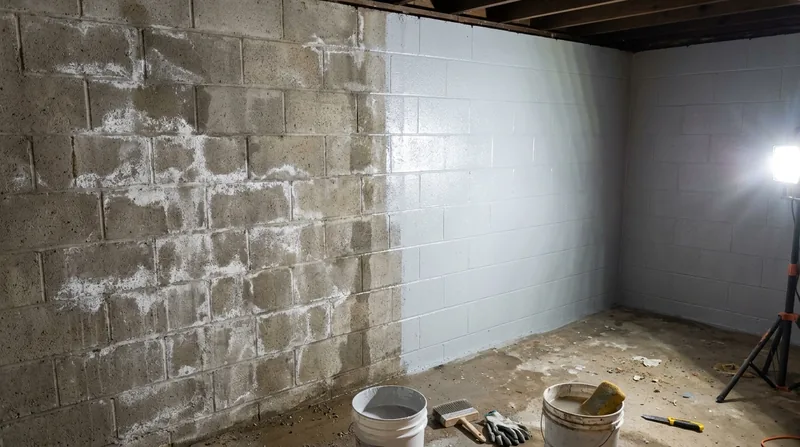




Fargo sits on the flat bed of glacial Lake Agassiz, and that history shows up in every basement here. The heavy gray Red River clay under Downtown, Hawthorne, Roosevelt and Oak Grove holds water, swells when wet, and drains slowly, so the water table stays high through spring. In the 1900s-1940s bungalows and foursquares, walls are poured concrete, block, or early stone, and many have been damp for decades. The 1950s-1970s ranches on the older east and south sides have partly finished basements where white powder on the wall is the first sign. Basement Wall Sealing in Fargo starts with an honest look at what is actually causing the moisture, because a sealer fixes surface dampness, not hydrostatic pressure. We prep the wall, remove efflorescence, and apply penetrating or membrane sealers where they will do real work. If the water is pressing in from the clay, we say so and point you to basement waterproofing instead of selling you a coating that cannot hold.
Why Basement Wall Sealing Matters in Fargo's Clay and Frost
Red River clay is the whole story in this metro. It swells against the foundation when wet, shrinks away when dry, and moves water slowly, so snowmelt and Red River flood stages keep pressure on basement walls well into May. Summer storms then send fast surface runoff to low corners, and deep frost and freeze-thaw cycles work on every crack and parged patch. Sealing is the right first step when the wall is damp, chalky, or weeping slightly, not when water is running in.
- We remove efflorescence and loose parging so the sealer bonds to sound concrete or block, not to salt powder.
- We identify active seepage and tell you when a coating will fail under hydrostatic pressure.
- We seal damp walls in older Downtown and Hawthorne basements where the concrete has never been treated.
- We check grading and downspout extensions, because water dumped at the wall defeats any sealer.
If the wall is damp but not leaking, sealing is usually enough, and we will tell you that plainly rather than upsell an excavation.
Key info: A 1920s foursquare in Oak Grove with chalky block walls and no standing water is a sealing job. A 1970s ranch in south Fargo with water on the floor after every spring melt is a drainage job, and no sealer will change that.
For permit questions on any work that alters drainage, the City of Fargo Inspections Department is the authority to check, and rules vary by jurisdiction: City of Fargo Inspections.
How We Seal Basement Walls in Fargo, Step by Step
We start by finding the source, not by opening a bucket. A moisture meter and a walk of the perimeter tell us whether the wall is damp from humid summer air, from capillary rise, or from water pushing through the clay. That distinction decides whether you get a sealer, a crack injection, or a drainage conversation. We do not skip the diagnosis to save an hour.
- We inspect the wall, the cove joint, the floor, and the exterior grade, and we note any crack that needs foundation crack repair before sealing.
- We wire-brush and scrub off efflorescence, loose parging, and old failing paint so the surface is sound.
- We fill small voids and honeycombs with hydraulic cement or a patching mortar and let them cure.
- We apply a penetrating sealer on porous block and poured walls, or a membrane sealer where a film is appropriate.
- We extend downspouts and correct grade so roof and surface water moves away from the wall.
- We walk the wall with you at the end and explain what the sealer can and cannot do.
Expect a clean, dry surface and a straight answer about whether the job is finished or just the first layer of a bigger fix.
Key info: In a 1990s Horace subdivision, a poured wall with white efflorescence and no standing water gets cleaned and sealed in a day. In a 1950s split-level near Mapleton with water at the cove joint, we recommend an interior drain tile system instead, because the clay is pushing water, not humidity.
Sealing Approaches We Use on Fargo Basement Walls
Not every wall takes the same product. Poured concrete, block, and early stone behave differently, and a basement that stays humid in July needs a different answer than one that weeps in April. This table shows how we match the approach to the wall and the symptom.
| Approach | Description | Best for |
|---|---|---|
| Penetrating sealer | Soaks into concrete and block pores and reacts to block moisture vapor without a surface film. | Damp, chalky block walls in older Fargo homes |
| Membrane sealer | Leaves a flexible coating that bridges hairline surface checks and resists mild seepage. | Poured walls with fine surface cracks and damp patches |
| Efflorescence removal and prep | Scrubs off salt deposits and loose parging so any sealer can bond to sound material. | White powder, flaking paint, and old patched walls |
| Crack injection (epoxy or polyurethane) | Fills an active crack from the inside with ports and resin instead of coating over it. | A single leaking crack in a poured wall |
| Drainage referral | We tell you when the wall needs drainage, not a sealer, and explain the reason. | Water at the cove joint under hydrostatic pressure |
We recommend the least invasive option that actually solves the problem, and we put the reasoning in writing.
Basement Wall Sealing Cost in Fargo: What to Expect
Most residential wall sealing jobs in this metro start around $1,500, and that figure buys real work: inspection, efflorescence removal, surface prep, patching, and sealer on a typical basement wall run. From there, the number moves with square footage, wall condition, and how much prep the block or stone needs. A small 1950s ranch in West Fargo with a sound wall sits near the low end. A large walkout in Horace with heavy efflorescence and old failing paint sits well above it.
Access matters too. A basement packed with shelving and stored boxes takes longer to work around, and a wall that needs crack injection before sealing adds a separate line item. We give you a written scope so you can compare bids on the same work. Get two or three estimates, and ask each contractor whether they checked for hydrostatic pressure or just quoted a coating. Our full pricing overview lays out the ranges in more detail.
Basement Wall Sealing Near Me: How to Choose a Fargo Contractor
Waterproofing is a trade with a low barrier to entry, and a truck and a sprayer do not make a specialist. Ask for the license and insurance certificate before anyone starts, and confirm the coverage is current for the company doing the work, not a subcontractor you have never met. Get at least two written estimates with the same scope so you compare prep and materials, not just the bottom line.
Ask for local references from basements like yours, block versus poured, and call one. Confirm who pulls any permit if the job touches drainage or structural repair, and check with the City of Fargo Inspections Department on what your address requires. If you are in an HOA, read the rules on exterior grade changes and discharge locations before work begins. When you are ready to talk, contact us and we will walk your basement and give you a straight answer.
Basement Wall Sealing in Fargo: Pricing Guide
| Service | Price | Details |
|---|---|---|
| Single wall sealing, small basement | Starting at $1,500 | Includes inspection, efflorescence removal, prep, patching, and sealer on one wall run |
| Full basement perimeter sealing | Starting at $2,800 | Covers all walls; price rises with square footage, block versus poured, and prep needed |
| Sealing with crack injection | On estimate | Active cracks are injected before sealing, so the scope needs an on-site look |
| Heavy efflorescence or failed parging | On estimate | Extensive scraping and patching changes labor hours and cannot be quoted blind |
| Travel | Included | in Fargo and surrounding areas, no separate call-out or mileage fee |
| Estimate | Free | Response within 24h at (701) 639-2877, no obligation to book |
Indicative pricing, the exact cost depends on square footage, finish, and site access. Free personalized estimate within 24h at (701) 639-2877.


