Why Spring Melt Is the Riskiest Season for Fargo Basements
In the Red River Valley, spring arrives with a force that homeowners in Fargo know all too well. As temperatures climb, the deep frost in the ground begins to thaw from the top down, and the ground is still frozen solid below. That means melting snow and early spring rain cannot soak into the soil. Instead, the water runs along the surface, pools against foundations, and finds every crack and seam it can. For basements, this is the annual stress test.
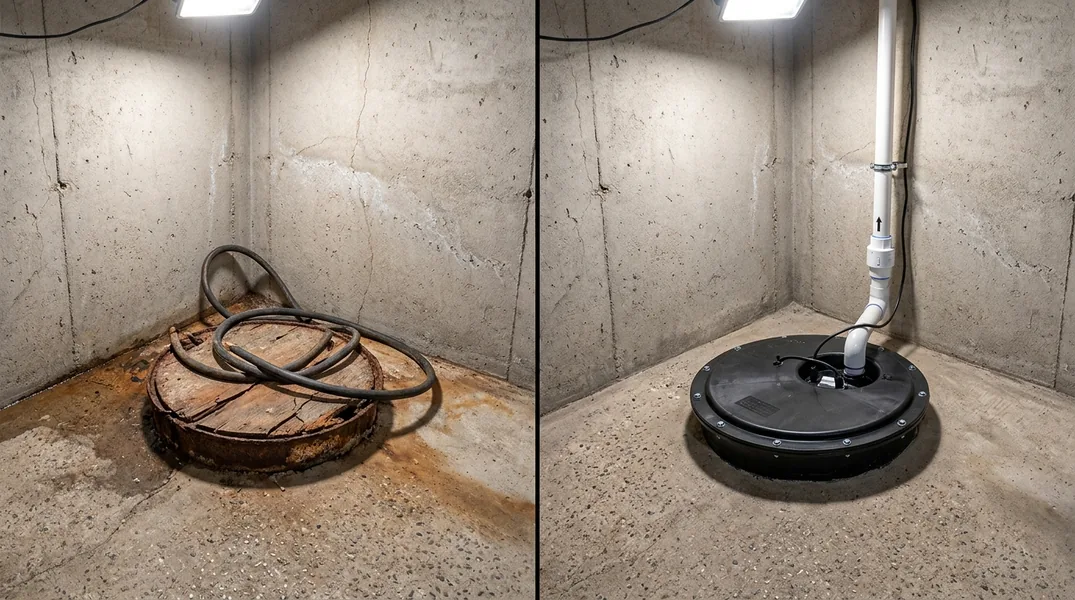
Your sump pump is the first line of defense during this window. It sits in the lowest part of the basement or a specially dug pit, collecting water that seeps in and pushing it safely away from the house. When it works, you may never notice it. When it fails, you notice fast. A pump that has sat idle all winter can seize, clog, or lose its prime right when you need it most. That is why sump pump maintenance in late winter and early spring is not optional in this region; it is basic home protection.
Sump Pump Maintenance Checklist Before the Thaw
Start with the basics that any homeowner can handle. First, unplug the pump and inspect the pit. Remove any debris, silt, or gravel that has collected, and make sure the float or switch moves freely. A float that sticks can leave the pump running dry or prevent it from starting at all. Next, check the discharge pipe and hose for cracks, kinks, or ice blockage. The pipe should carry water several feet away from the foundation and slope downward so water does not flow back toward the house.
Then test the pump properly. Fill the pit with water until the float triggers the pump, and watch how quickly the water level drops. A healthy pump clears the pit fast. If it struggles, hums without pumping, or cycles on and off rapidly, it needs attention. This is also the moment to inspect the Basement Waterproofing system around the pit, including any interior drainage that feeds it. If you are not comfortable testing the system yourself, a professional inspection is a smart investment before the ground starts releasing water.
Don't Overlook the Sump Pump Check Valve and Backup Power
Two components are frequently ignored and both matter enormously during storm season. The first is the sump pump check valve. This one-way valve sits on the discharge line and prevents water from flowing backward into the pit after the pump shuts off. Without a working check valve, every cycle ends with water draining back down, forcing the pump to run again and again. That shortens the pump's life and can leave you with a burned-out motor during the heaviest rain. Inspect the valve for debris and make sure it seals properly, and replace it if it is old or stuck.
The second is a battery backup sump pump. Spring storms in the valley are famous for knocking out power, and a primary pump that depends on electricity is useless when the lights go out. A battery backup kicks in automatically and keeps pumping until power returns. Test the battery, check the terminals for corrosion, and confirm the backup actually runs during your test cycle. If your backup is more than a few years old, have it evaluated. Storm basement flooding often happens not because the primary pump failed, but because there was no backup when the power did.
When to Call a Pro for Sump Pump Service Near Me
Some maintenance is DIY-friendly, but certain warning signs call for an expert. If your pump runs constantly, makes grinding or rattling noises, trips the circuit breaker, or leaves standing water in the pit after a cycle, the unit may be undersized, worn out, or improperly installed. The same is true if your basement has a history of dampness even when the pump seems to work. In those cases, the problem may be bigger than the pump itself, involving how water reaches the pit in the first place.
That is where a full assessment helps. A properly designed system often pairs the pump with an Interior Drain Tile System that channels water from the footings to the pit. Homes with persistent seepage may also benefit from Exterior Basement Waterproofing or targeted Foundation Waterproofing to stop water before it enters. If you are searching for sump pump service near me in West Fargo or the surrounding communities, a professional can tell you whether a simple repair is enough or whether the system needs an upgrade. Call Fargo Waterproofing at (701) 639-2877 to schedule a free estimate before the melt begins.
Storm Basement Flooding: Plan Ahead, Not After
Storm basement flooding rarely announces itself. It usually happens on a warm day when the snowpack releases quickly, the ground is still frozen, and rain adds to the load. Homeowners in Horace and Harwood face the same conditions, and the difference between a dry basement and a flooded one often comes down to preparation done weeks earlier. Testing your pump in February or early March is far cheaper than replacing carpet, drywall, and stored belongings in April.
Make a simple plan: test the pump monthly during melt season, keep the discharge area clear of snow and ice, and know where your backup power stands. If you want help reviewing your setup or understanding pricing for upgrades, reach out to Fargo Waterproofing. A little maintenance now protects your home when the valley's spring water starts moving.
Looking for a professional basement waterproofing contractor in Fargo? Fargo Waterproofing responds fast for all your basement waterproofing needs.
Get a Free QuoteOur services: Basement Waterproofing · Interior Drain Tile System · Exterior Basement Waterproofing